



Built for
the field.
A closer look at what goes into a Heimdall sensor.
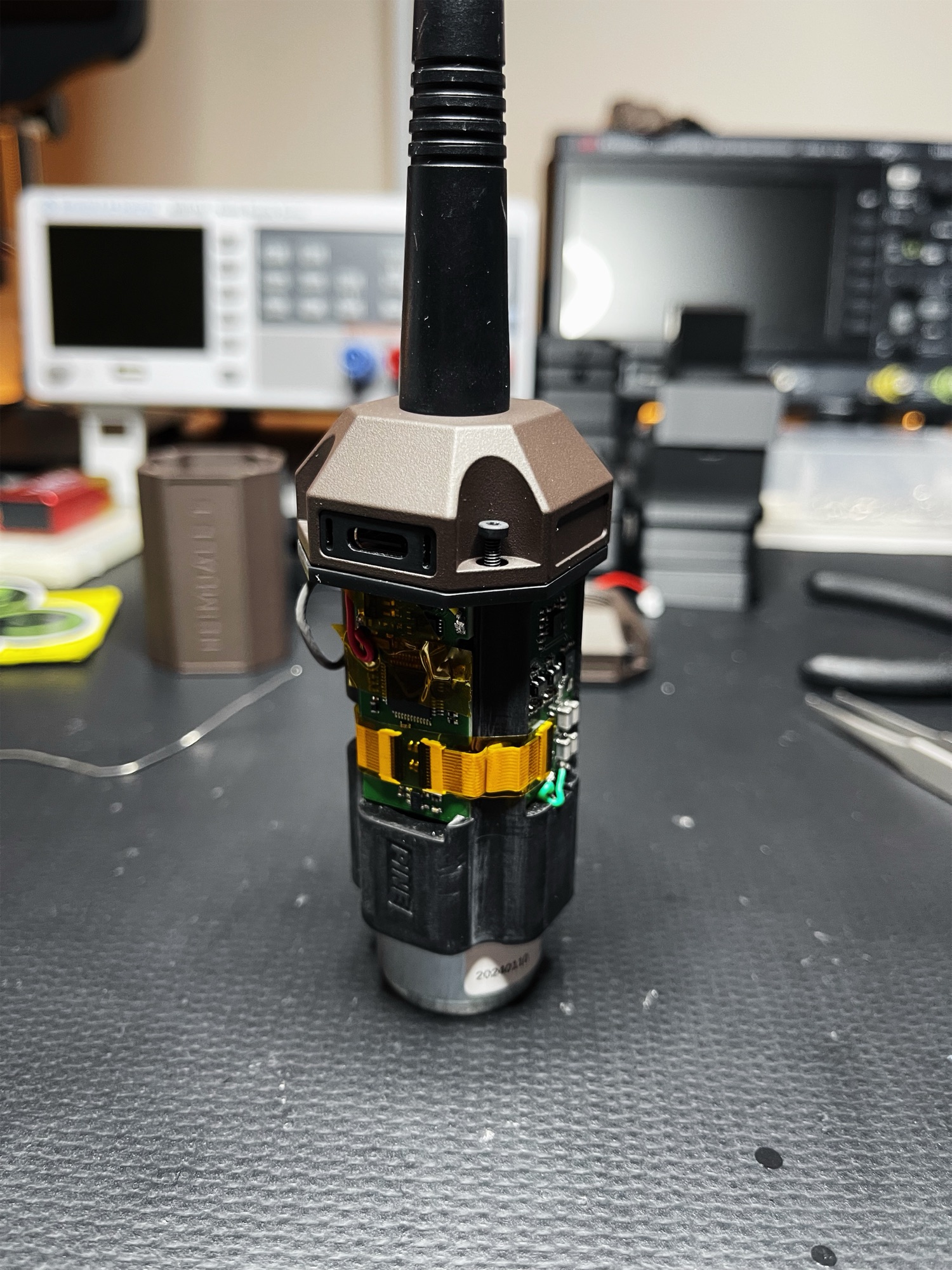 Radio boardMain boardSignal amplifierGeophone
Engineered from
the ground up.
Custom electronics, a sensitive geophone, and a low-noise amplifier designed to detect the subtle vibrations of approaching footsteps.

Machined from
aluminum.
CNC-machined aluminum is rugged enough for the field, and shields the sensitive electronics from interference.

Ceramic coated.
SandClay BrownMoss GreenBurnt UmberShale GrayBasalt Black
Every enclosure is finished in Cerakote, a thin-film ceramic coating, in six colors from Sand to Basalt Black.
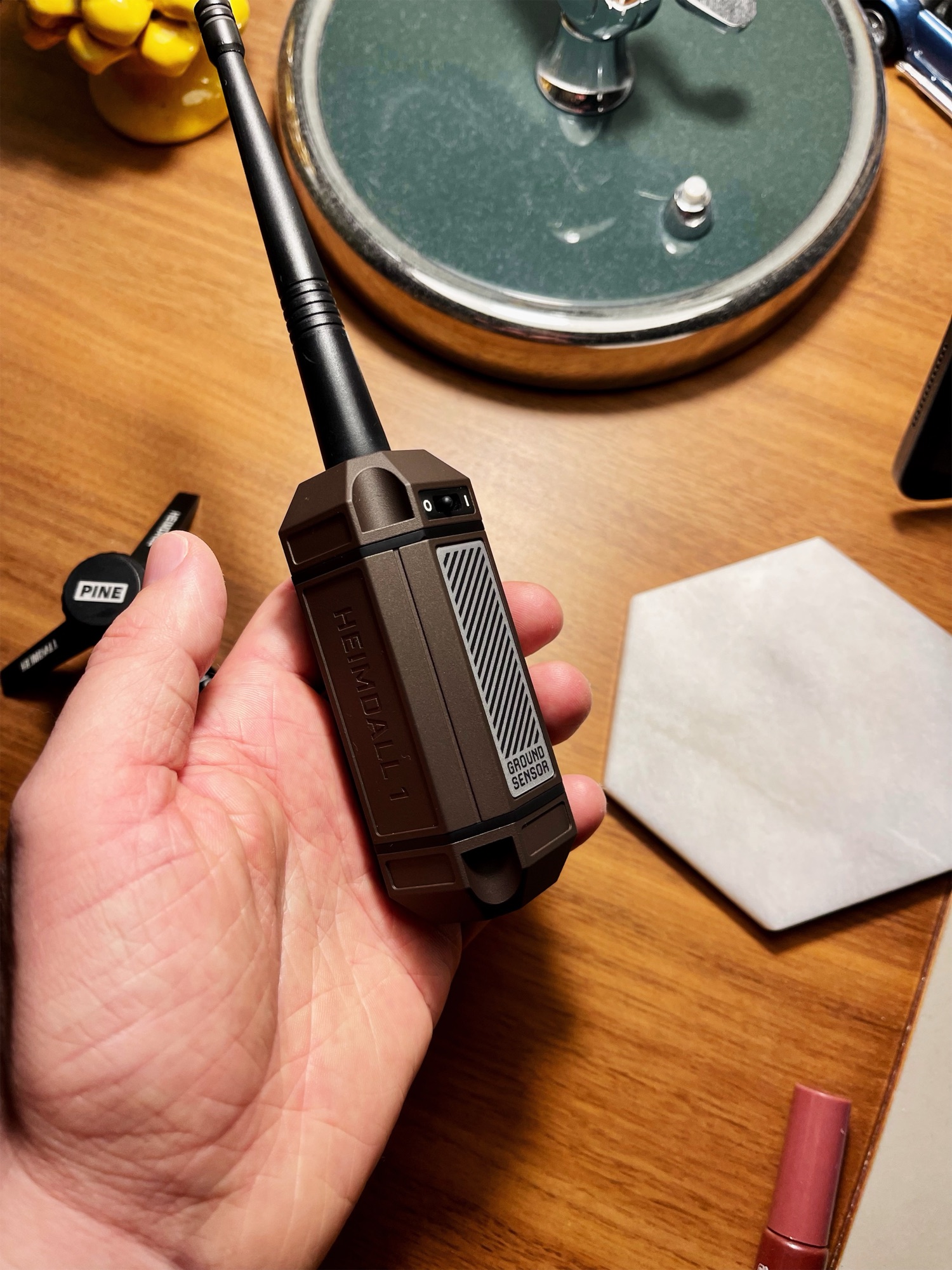
Fits in one hand.
262g9.2 oz
200 × 38 × 38 mm7.9 × 1.5 × 1.5 in
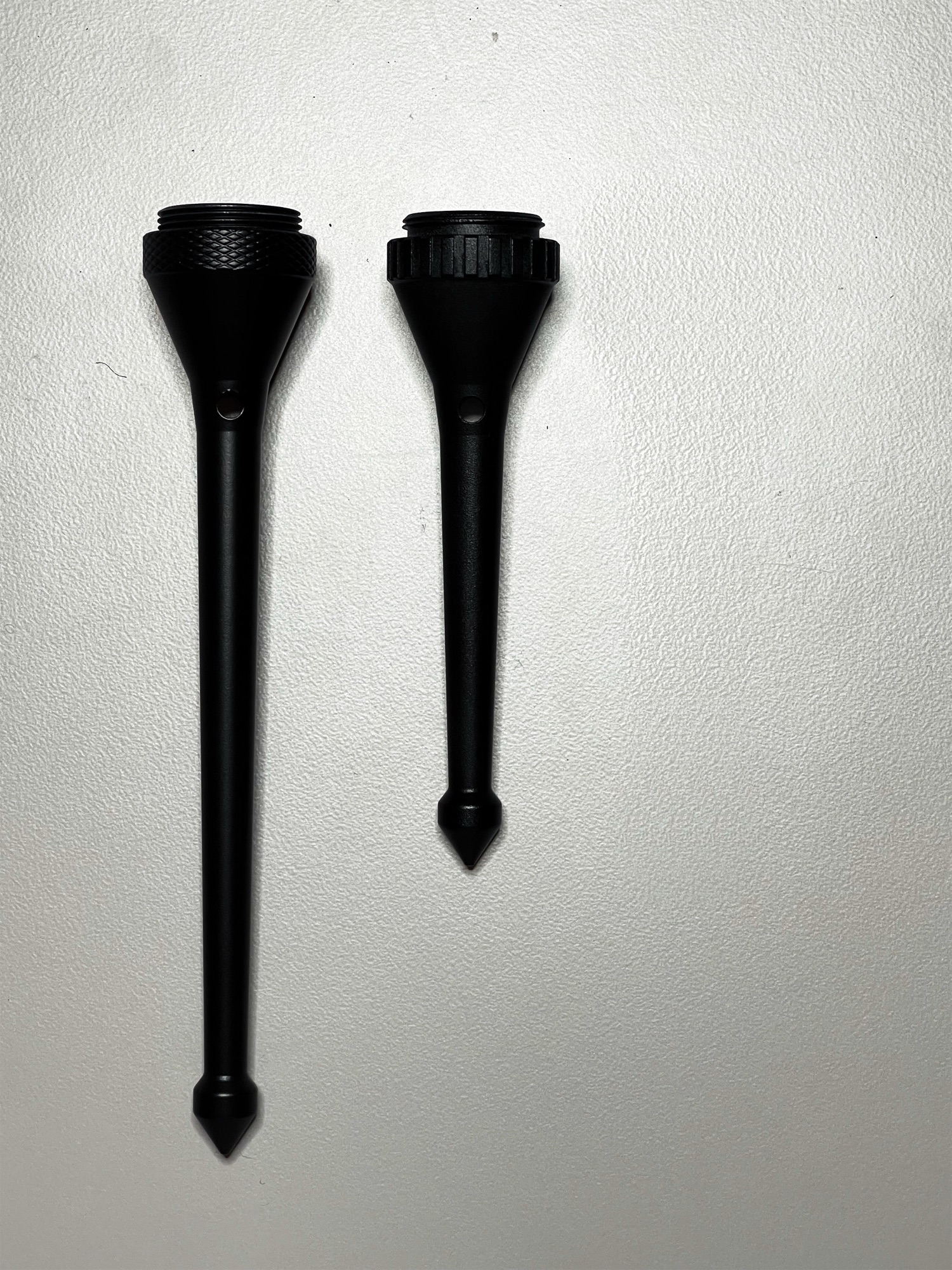 Long spikeShort spike
Four ways
to deploy.
A long spike, a short spike, a tripod, or straight on the ground.



- Detection angle
- 360°
- Battery life
- Up to 46 hours
- Bluetooth range
- 60 m [197 ft]
- Charging
- USB-C
- Net weight
- 262 g [9.2 oz]
- Mounts
- Spike or tripod
- Enclosure
- Machined aluminum
- Finish
- Cerakote
- Model
- Heimdall 1